Delhi’s Step Towards Catastrophe

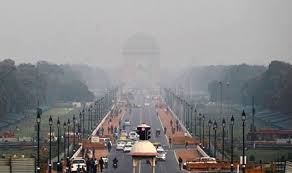
Once regarded as one of the greenest capital city of the World, Delhi has now been sobriquet as the World’s most polluted city. From the last few decades, Delhi’s pollution is a subject matter of discussion before Courts, Government Departments and civil society. Despite various interventions either from the courts or administration no viable solutions have found to mitigate the air pollution.However, apart from air pollution, another problem which is a sight for the citizens of Delhi is the issue of water Scarcity. Delhi’s water cycle has been completely disturbed from last many years, and we are experiencing the annual decline in the rainfall and thus the water shortage especially in summer months. The possible reasons for the disturbance in the rain pattern of Delhi is may be due to the alteration of the overall ecology of Delhi. A few decades ago, Delhi was accustomed to extreme weather conditions and a predictable cyclic weather system. The year used to start with cold winters which continued till mid-March and remain until the arrival of the monsoon which brought instant and prolonged reliefs to Delhi from the scorching summers and Dussehra was marked with the arrival of the winters which peaked in December-January. However, with the spur in economic growth and rising population of Delhi since independence, there has been rapid and unchecked urbanization. The profound change in Delhi’s landscape has thrown up new challenges to its ecosystem.

In last few years there has been a noticeable change in the Delhi’s weather system, which had impacted the duration and intensity of every season which Delhi witnesses in a year. It has been reported by various agencies that due to rapid environmental degradation there has been an adverse impact on the monsoon in Delhi and precipitation is also declining. This gives rise to the increase in average temperature during monsoon season and prolonged the summer temperature till October. This change in weather is also affecting the winters of Delhi. The Delhi which was known for its long (November-March) and sometimes unforgiving winters, has largely shrunk to a few weeks, witnessed in late December and January.

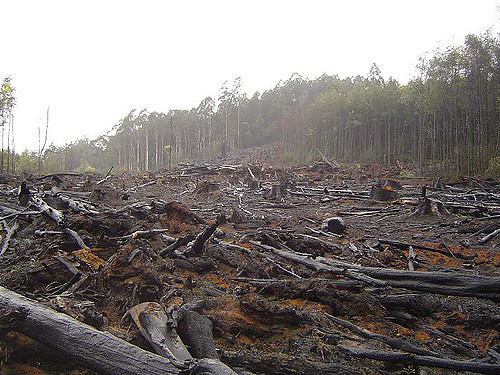
One of the major reasons attributable to these climatic changes may be the alteration of Delhi’s ecosystem overall caused it may be the loss of natural vegetation and rapid urbanization. This continuous degradation has also adversely impacted the water cycle of Delhi.

It is a fact that trees act as an intermediary in many ecological processes such as Nitrogen Cycle, Carbon Cycle, Water Cycle etc., therefore, they are extremely important ecological agents which regulates the overall environment of a particular area because of it. Furthermore, it is also a natural phenomenon that during rainfall, the rainwater runs along the ground and flows into the river and then to the ocean. A part of the rainwater that falls on the land percolates into the ground. This water stored underground throughout the rest of the year. Water is drawn up again from the ground by trees and plants with nutrient from the soil. The Water then transpired (Transpiration) from the leaves in the form of water vapour and returned to the atmosphere as water vapours. Because water vapours are lighter than air it goes up high in the atmosphere and makes clouds.

Later, the wind blows the clouds for long-distance and when the clouds rise higher, the vapour condenses and changes into droplets, which fall on the land again in the form of rain. This never-ending natural phenomenon is called the Water Cycle or Hydrological Cycle. Hence, trees play a vital role in maintaining the natural environment, and in the in absence of trees, many ecological processes cannot take place. Therefore, trees are a vital agent to regulate and conserve the water in the atmosphere and in the underground. And a reduction in the tree cover will certainly have devastating consequences on the water cycle of Delhi, and which would lead to the severe water crisis in future.

Water is the most important resource for the survival of life on this planet, and it is a fundamental human need and a critical national and international asset. Unfortunately, this precious resource is depleting swiftly everywhere. Cape Town has only a few days of water supply left. And if we go with the recent report of BBC, São Paulo and Bengaluru will be waterless cities very soon. The main causes of Water crisis are the increase of average global temperature, rapid urbanization, and increase in population and uncheck cutting of trees and deforestation etc. Thus, the government and the citizens have “Common but differentiated responsibility” to save the water for the future. Access to clean water is also a basic human right. The 2030 Sustainable Development Goal (SDGs) carved out by UN General Assembly also accepted the access to safe water as a global goal. Hence, Water Scarcity is a Global phenomenon which is gradually becoming a man-made catastrophe of the 21st Century.

The situation in Delhi is also not encouraging. A recent Scientific Study conducted by the group of Scientist concluded that Delhi is the 2nd most water-stressed city of the World. Moreover, it is a well known scientific fact that the reduction of natural vegetation is directly proportioned to the water scarcity.
The Indian Space Research Organization (ISRO) in 2016 released the Desertification and Land Degradation Atlas of India and this shown that Delhi is 3rd highest desertification/land degradation state of India, with alarming desertification rate of 11.03 %. Further, the India State Forest Report 2017 revealed that the Lutyen’s Delhi has lost 0.84 Square Kilometer of the forest cover. Also, the Indian Meteorological Department report has stated that annual rainfall has decreased by 95% in Delhi and other neighbouring states. The same report has also indicated an increase in the minimum temperature of Delhi.
These changes in the weather and climatic phenomena are due to the change in the ecology of the Delhi and loss of natural vegetation in and around Delhi. The city, which has been catering the ecological demand of its citizens since its creation, is in peril and needs immediate protection from degradation. It is estimated that Delhi has some 20,000 small or big parks, 5 Ridges (Southern, Central, Southern Central and Northern), 4 biodiversity parks (Aravalli Biodiversity Park, Yamuna Biodiversity Park, Neela Hauz and Tilpat Valley Biodiversity Park), Bird Sanctuary at Okhla and a Wildlife sanctuary (Asola Bhatti Wildlife Sanctuary), these natural spaces are essential for sustaining the life in Delhi. And to protect the natural environment the Mughal, the British, and many later administrations had also made a number of attempts. If one trace the ecological history of Delhi, we can see, that there were many natural and man-made water bodies were present in Delhi, which has either dried up or become polluted today.

Amidst of this the Ministry of Environment, Forest and Climate Change (hereinafter MoEF &CC) granted the Environmental clearance to National Building Construction Corporation (hereinafter NBCC) to cut down 15,000 trees for various residential and commercial projects in areas like Sarojini Nagar, Mohammadpur, Naroji Nagar, Netaji Nagar etc. The petitioners believe that the said projects will destroy the thick tree cover of these areas permanently. The Petitioners comprehends that trees are the natural sink of carbon and help in carbon sequestration. And if the proposed projects are allowed it will have a detrimental effect on the overall ecological balance of the city. So, the main intention of the petitioners to file this petition is to highlight the other adverse effects of a reduction of tree cover and more specifically its effect on the decline of annual rainfall and disturbance of Water Cycle.

Moreover, we cannot afford further environmental degradation in Delhi, and we cannot bear the drying up of our water bodies. Hence, the Petitioners prefer this petition, urging this Hon’ble Court to protect the Natural Environment of the Delhi and preserve the Right to Live in the Wholesome Environment.
Dehumanizing Rule by Syrian Ruler

9631024-3x2-700x467

Picture Courtesy http://www.abc.net.au available here

  • Dr Anwar Sadat

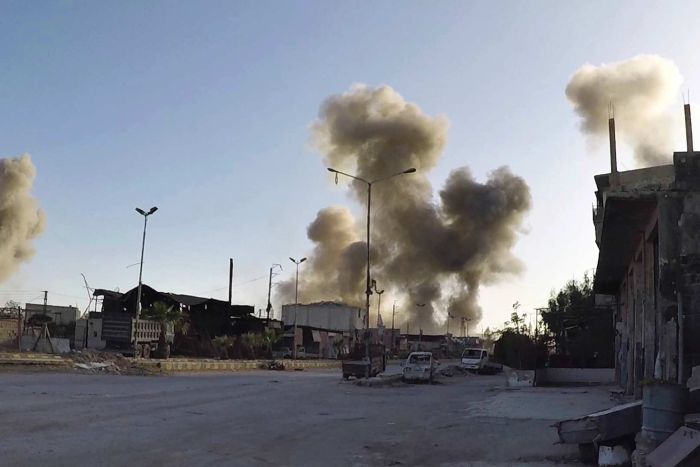
It is said that the king or ruler symbolizes divinity on earth. He is the representative of god on earth. In the prevailing Westphalian model, sovereigns are supposed to be trustee of its people. The warring factions waging war in Syria are more interested in carving out and retaining their strategic gains. The raison daitre of the creation of state is to ensure protection of life, liberty and property. Use of chemical weapons by the Syrian Government led by Bashr-Al-Asad having the support of Russia and Iran on 05-04-18, led to killing more than seventy people which includes  young children and many civilians. Of course, the killing of innocent people is taking place every day in international and non-international armed conflicts.  But the use of chemical weapon is particularly reprehensible and morally unacceptable means of conducting armed conflict. It carries the stigma of moral illegitimacy. The reason is attributable, inter alia, the association of chemical weapon with poison.

The scene of young children being gassed and some of them being treated in the rebel held province makes all of us tearful. It is important to mention that physiologically the higher respiratory rate found in children increases the inhaled dose of aerosolized agents. Gases with a density heavier than air such as sarin, chlorine, and toxins from burning substances accumulate closer to the ground, producing a higher concentration of poison closer to the airspace or breathing space of small children.  Airway obstruction by edema, secretions, or positioning is a constant concern because of more narrow and smaller airways in children. Children also have thinner, less keratinized skin and a larger body surface area to body mass ratio than adults. This increases transdermal absorption of toxins and causes greater damage to skin by vesicants and corrosives. The larger body surface area to body mass ratio increases the risk of hypothermia associated with decontamination procedures unless provisions are made to keep children warm. Children also become dehydrated from vomiting, diarrhea, burns, or hemorrhage more quickly than adults because of their smaller fluid reserves.

There are three people whose prayer is listened to by Allah is just ruler, people observing fast and oppressed people. In this framework, the Syrian ruler is the most disgraceful. In this situation, international community should take a call on the oppressed people of Syria.


  • The author is a Senior Assistant Professor of International Law at the Indian Society of International Law, New Delhi- sadatshazia@gmail.com

Cape Town is drying: And Indian Cities will be next

By Rohit Kumar

#capetown

Cape town has only 90 days water supply left. The aquifers and other natural resources are drying. A city located in midst of Indian Ocean and Atlantic cannot consume the saline water. Cape town crisis is the catastrophe for the entire mankind and soon this problem will occur in the other parts of the world. The signs of water crisis observed in the Indian Subcontinent as well. The 2016 Marthawada drought was discussed in all circles of the policymaking. But I believe that no comprehensive action plan is ready in India which could combat the water scarcity problem in the future. The whole credit of our present water crisis goes to each one of us. Because we are failed to understand the value of this precious resource and because we are still not insisting our governments to make punitive laws for wastage of water. Delhi and some other administrations at least ban the boring for water extraction for household purpose. But still no checks on the wastage of the water.  If the wastage problem will persist in Delhi, it will be completely dry in some time too. But, as of now, we can only hope that the world community would come forward to help Cape Town in a best possible manner to the life on earth.


No Space for Environment in Political Agenda

By Rohit Kumar

Anders

Picture Source: Sustainability and Environment @OWU

The 2019 General Election is close by, and all political parties are busy in sensing the mood of the voters to shape their strategies. However, in India, the issues for elections are, always concentrated on the populist choice. And, these issues consistently range from religion, caste, corruption, poverty and unemployment. This set pattern of agenda has been picked up by the political parties since independence because these have been a part of the discussion among the masses. Media on the other hand also plays a vital role in framing the issues for the election and even condition the minds of the voters. But, among all this, no one is realizing that some very important issue like environmental protection is missing.

But, this is not a case in other parts of the world. In the last few years some political groups have come up to voice their concern for environmental protection and most successful example is the emergence of Dutch Green Left party, Groenlink. The GroenLinks was formed in 1989 after the merger of the traditional left parties and since its formation, the party has been putting the environment related issues forward in the mainstream politics. But, the first major victory for GreenLeft has reported in 2017  Dutch national election in which GroenLink managed to win 14 seats in the central assembly with the support of some 8.9 % vote share. The man behind GroenLink success was its prominent leader Jesse Klaver. Klaver campaigned and roamed around the University Campuses of Leiden, Utrecht, Maastricht, Rotterdam etc and discussed with students about the environment-related issues like clean energy, cutting down on coal thermal plants, levying taxes on the polluters, ending subsidies for fossil fuel usage and rewarding and promoting research and development of clean fuel, etc.

Now, if we compare India with the Netherlands it is very difficult to find any politician who talks about the environmental protection and the climate changes and the reason of it is also very clear that the mass of people are not talking about it. The public debating spaces especially Indian universities are also filled up with the traditional issues.  Because, politically motivated student groups are pouring the same traditional issues in the university atmosphere, thus the importance of environmental protection is not visible. Although, it is undeniable that the environmental degradation is a matter of greater public concern and its devastating effect is visible in India as other parts of the world. In spite of that, the debates and discussion yet to start in general public and it is still restricted only among the civil societies, policymakers and academic researchers. If we look at Uttrakhand flood, Delhi smog,  Mumbai rain are some examples of changing of climate, but ironically no one is talking about it in general debates, and that is why our government is also not serious about it.

In India, if we want to raise the issues of environment and climate change the Universities have to take a lead and try to mould the perception of the people toward the environment and bring the green agendas into the mainstream politics.  GroenLink victory in the Netherlands is a positive sign which is setting a trend across the world to put forward the green issues in the political manifestos. The paradigm is also shifting towards the demand for sustainable development across the world. This is also evident from the facts that the more and more new political parties are emerging out with a call to protect the planet. Uttrakhand Parivartan Party (UPP) is perhaps the only political party from India which has formed along the lines of GroenLink and may look forward to drive an eco-friendly agenda in the forthcoming elections.

#Climatechange , #ClimateAction, #ClimatechangeIsReal


A Story of an Unstable Planet


233523196_a4abdd1b24_z

Image Source: Flickr

By Dr Anwar Sadat, New Delhi

Planet earth is divided among sovereign states. They are 194 in number. But we are one. We use the same common resource that is an atmosphere. We use the same stratosphere which saves mankind from ultraviolet radiation. We should never shy away from the thinking that we are part of the same living room. Climate change poses the existential threat to mankind. It is caused by the release of greenhouse gases into the atmosphere, the sources of which are spread throughout the world. The impacts of climate change are felt globally. It is also important to note that the effects are felt disproportionately.

In light of the above, it is clear that global challenges can be addressed globally and collectively only. There is no institution which can take binding decisions without the consent of the sovereign states. The International legal system depends on the consent of sovereign parties. The states give their assent to an agreement to regulate a global concern only after securing their national interests. There is apparent consensus on restricting global average temperature to 2 degree Celsius as compared to pre-industrial levels. The commitment is being reiterated not only in Conference of the Parties meeting but in almost all the writings written in science, law and policy journal as something which is a benchmark.

The Paris Agreement 2015 which is in force commits to restrict global average temperature to 2 degree Celsius. But the commitments expressed by the parties through their nationally determined contributions (NDCs) are inadequate. There is big deficit in terms of the reduction needed to achieve the target and the reduction that could be achieved through commitments that are embodied in the NDCs. The planet seems to be clearly unstable.

The goal of 2 degree Celsius is taking shape as a fundamental norm. The goal establishes one thing that the maximum amount of GHG to be emitted is limited. The goal sets a global cap. The scientists have established planetary boundaries which represent as a threshold, beyond which we are doomed. The threshold represents self-operating space for the earth system. Breaching of the threshold is replete with serious consequences. The consequences are going to be non-linear.

We are way behind in terms of mobilizing sufficient finance and transferable environmentally sound technology. The developed nations are committed to mobilize 100 billion dollars by 2020. The said amount is not only inadequate, but the efforts of the developed countries do not appear to be in a position to achieve the target. One important reasoning behind this inadequacy is that there is no mandatory source of mobilization of the fund on a global scale to fund the mitigation efforts in developing countries. The developed countries are facing political pressures internally and are also facing recession to make such commitments.

The funds vested with Global Environment Facility (GEF) 1991 and Green Climate Fund (GCF) 2015 are inadequate to meet the costs of both investment operations and the costs of transfer of environmentally sound technology. The flow of technology from the industrialized to developing countries is not barrier-free. Its flow to a large number of developing countries is obstructed by intellectual property rights regime (IPR). The issues relating to IPR are being regulated by the agreement on Trade-Related Intellectual Property Rights (TRIPS). The World Trade Organization administers the TRIPS agreement. The functions and judgments of WTO paint a picture of self-contained regimes. Scholars are also saying that climate change is global externalities and it is global public goods. In such situation, IPR regime should not obstruct the flow of transfer of technology.

Climate change is the common concern of mankind. It is a concern beyond the confines of sovereign territory. It is a paradigm shift, a shift away from state oriented to international community-oriented approach. Common concern lays down a perspective which enjoins individual, state, NGOs, multinational corporations and international organizations a duty to share information, technology, technological-knowhow in fighting against climate change. The principle of common concern enjoins a duty on all sovereign states to cooperate with each other. It also enjoins everyone to maintain due diligence. In this regard, it is relevant to mention the concept of shared international responsibility and the idea of global compact initiated by the United Nations. When the idea of responsibility to protect got enunciated first, it also included responsibility to protect environmental refugees.

  • Anwar Sadat is a Senior Assistant Professor in International Environmental Law at the Indian Society of International Law, New Delhi.
  • Email:-  sadatshazia@gmail.com  Phone: 9899079998