
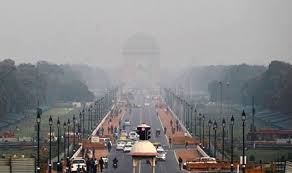
 Once regarded as one of the greenest capital city of the World, Delhi has now been sobriquet as the World’s most polluted city. From the last few decades, Delhi’s pollution is a subject matter of discussion before Courts, Government Departments and civil society. Despite various interventions either from the courts or administration no viable solutions have found to mitigate the air pollution.However, apart from air pollution, another problem which is a sight for the citizens of Delhi is the issue of water Scarcity. Delhi’s water cycle has been completely disturbed from last many years, and we are experiencing the annual decline in the rainfall and thus the water shortage especially in summer months. The possible reasons for the disturbance in the rain pattern of Delhi is may be due to the alteration of the overall ecology of Delhi. A few decades ago, Delhi was accustomed to extreme weather conditions and a predictable cyclic weather system. The year used to start with cold winters which continued till mid-March and remain until the arrival of the monsoon which brought instant and prolonged reliefs to Delhi from the scorching summers and Dussehra was marked with the arrival of the winters which peaked in December-January. However, with the spur in economic growth and rising population of Delhi since independence, there has been rapid and unchecked urbanization. The profound change in Delhi’s landscape has thrown up new challenges to its ecosystem.
In last few years there has been a noticeable change in the Delhi’s weather system, which had impacted the duration and intensity of every season which Delhi witnesses in a year. It has been reported by various agencies that due to rapid environmental degradation there has been an adverse impact on the monsoon in Delhi and precipitation is also declining. This gives rise to the increase in average temperature during monsoon season and prolonged the summer temperature till October. This change in weather is also affecting the winters of Delhi. The Delhi which was known for its long (November-March) and sometimes unforgiving winters, has largely shrunk to a few weeks, witnessed in late December and January.
One of the major reasons attributable to these climatic changes may be the alteration of Delhi’s ecosystem overall caused it may be the loss of natural vegetation and rapid urbanization. This continuous degradation has also adversely impacted the water cycle of Delhi.
It is a fact that trees act as an intermediary in many ecological processes such as Nitrogen Cycle, Carbon Cycle, Water Cycle etc., therefore, they are extremely important ecological agents which regulates the overall environment of a particular area because of it. Furthermore, it is also a natural phenomenon that during rainfall, the rainwater runs along the ground and flows into the river and then to the ocean. A part of the rainwater that falls on the land percolates into the ground. This water stored underground throughout the rest of the year. Water is drawn up again from the ground by trees and plants with nutrient from the soil. The Water then transpired (Transpiration) from the leaves in the form of water vapour and returned to the atmosphere as water vapours. Because water vapours are lighter than air it goes up high in the atmosphere and makes clouds.
Later, the wind blows the clouds for long-distance and when the clouds rise higher, the vapour condenses and changes into droplets, which fall on the land again in the form of rain. This never-ending natural phenomenon is called the Water Cycle or Hydrological Cycle. Hence, trees play a vital role in maintaining the natural environment, and in the in absence of trees, many ecological processes cannot take place. Therefore, trees are a vital agent to regulate and conserve the water in the atmosphere and in the underground. And a reduction in the tree cover will certainly have devastating consequences on the water cycle of Delhi, and which would lead to the severe water crisis in future.
Water is the most important resource for the survival of life on this planet, and it is a fundamental human need and a critical national and international asset. Unfortunately, this precious resource is depleting swiftly everywhere. Cape Town has only a few days of water supply left. And if we go with the recent report of BBC, São Paulo and Bengaluru will be waterless cities very soon. The main causes of Water crisis are the increase of average global temperature, rapid urbanization, and increase in population and uncheck cutting of trees and deforestation etc. Thus, the government and the citizens have “Common but differentiated responsibility” to save the water for the future. Access to clean water is also a basic human right. The 2030 Sustainable Development Goal (SDGs) carved out by UN General Assembly also accepted the access to safe water as a global goal. Hence, Water Scarcity is a Global phenomenon which is gradually becoming a man-made catastrophe of the 21st Century.
The situation in Delhi is also not encouraging. A recent Scientific Study conducted by the group of Scientist concluded that Delhi is the 2nd most water-stressed city of the World. Moreover, it is a well known scientific fact that the reduction of natural vegetation is directly proportioned to the water scarcity.
The Indian Space Research Organization (ISRO) in 2016 released the Desertification and Land Degradation Atlas of India and this shown that Delhi is 3rd highest desertification/land degradation state of India, with alarming desertification rate of 11.03 %. Further, the India State Forest Report 2017 revealed that the Lutyen’s Delhi has lost 0.84 Square Kilometer of the forest cover. Also, the Indian Meteorological Department report has stated that annual rainfall has decreased by 95% in Delhi and other neighbouring states. The same report has also indicated an increase in the minimum temperature of Delhi.
These changes in the weather and climatic phenomena are due to the change in the ecology of the Delhi and loss of natural vegetation in and around Delhi. The city, which has been catering the ecological demand of its citizens since its creation, is in peril and needs immediate protection from degradation. It is estimated that Delhi has some 20,000 small or big parks, 5 Ridges (Southern, Central, Southern Central and Northern), 4 biodiversity parks (Aravalli Biodiversity Park, Yamuna Biodiversity Park, Neela Hauz and Tilpat Valley Biodiversity Park), Bird Sanctuary at Okhla and a Wildlife sanctuary (Asola Bhatti Wildlife Sanctuary), these natural spaces are essential for sustaining the life in Delhi. And to protect the natural environment the Mughal, the British, and many later administrations had also made a number of attempts. If one trace the ecological history of Delhi, we can see, that there were many natural and man-made water bodies were present in Delhi, which has either dried up or become polluted today.
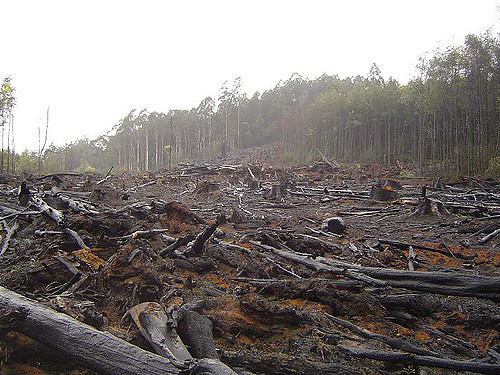
Amidst of this the Ministry of Environment, Forest and Climate Change (hereinafter MoEF &CC) granted the Environmental clearance to National Building Construction Corporation (hereinafter NBCC) to cut down 15,000 trees for various residential and commercial projects in areas like Sarojini Nagar, Mohammadpur, Naroji Nagar, Netaji Nagar etc. The petitioners believe that the said projects will destroy the thick tree cover of these areas permanently. The Petitioners comprehends that trees are the natural sink of carbon and help in carbon sequestration. And if the proposed projects are allowed it will have a detrimental effect on the overall ecological balance of the city. So, the main intention of the petitioners to file this petition is to highlight the other adverse effects of a reduction of tree cover and more specifically its effect on the decline of annual rainfall and disturbance of Water Cycle.
Moreover, we cannot afford further environmental degradation in Delhi, and we cannot bear the drying up of our water bodies. Hence, the Petitioners prefer this petition, urging this Hon’ble Court to protect the Natural Environment of the Delhi and preserve the Right to Live in the Wholesome Environment.
 Planetary Objectives